
 Svenska
 Dansk
Dansk
 Suomi
Suomi
 Español
 Deutsch
 Français
 Italiano
 Nederlands
 Polskie
 Norsk
Norsk
Cart
Your cart is empty, but doesn't have to be..
Discount: 0.00 EUR
Digital Skipper |26/01, 2022
In most cases, the installation of an engine data gateway works without problems, but sometimes errors occur that can be difficult to troubleshoot. In such cases, a log file is invaluable for identifying the cause.
Yacht Devices has a fast and competent support organization, but to provide the best help, they often need a log file from the product. Here we show you step-by-step how to create such a log file.
ENGINE_LOG = ONNote: The configuration is not saved in the device's memory on the YDEG-04. Recording stops when the card is removed or the network is shut down.
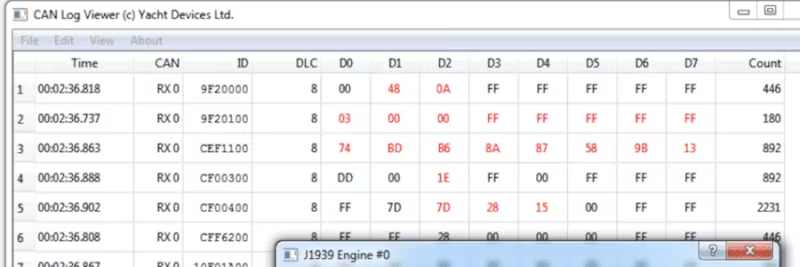
Use the free program CAN Log Viewer to view, convert, or export .CAN files. The program works on Windows, Mac OS X, and Linux:
http://www.yachtd.com/products/can_view.html
The file format is open and described in the CAN Log Viewer documentation. Protocol knowledge is required for analysis: