Svenska
 Dansk
Dansk
 Suomi
Suomi
 Español
 Deutsch
 Français
 Italiano
 Nederlands
 Polskie
 Norsk
Norsk
Cart
Your cart is empty, but doesn't have to be..
Discount: 0.00 EUR

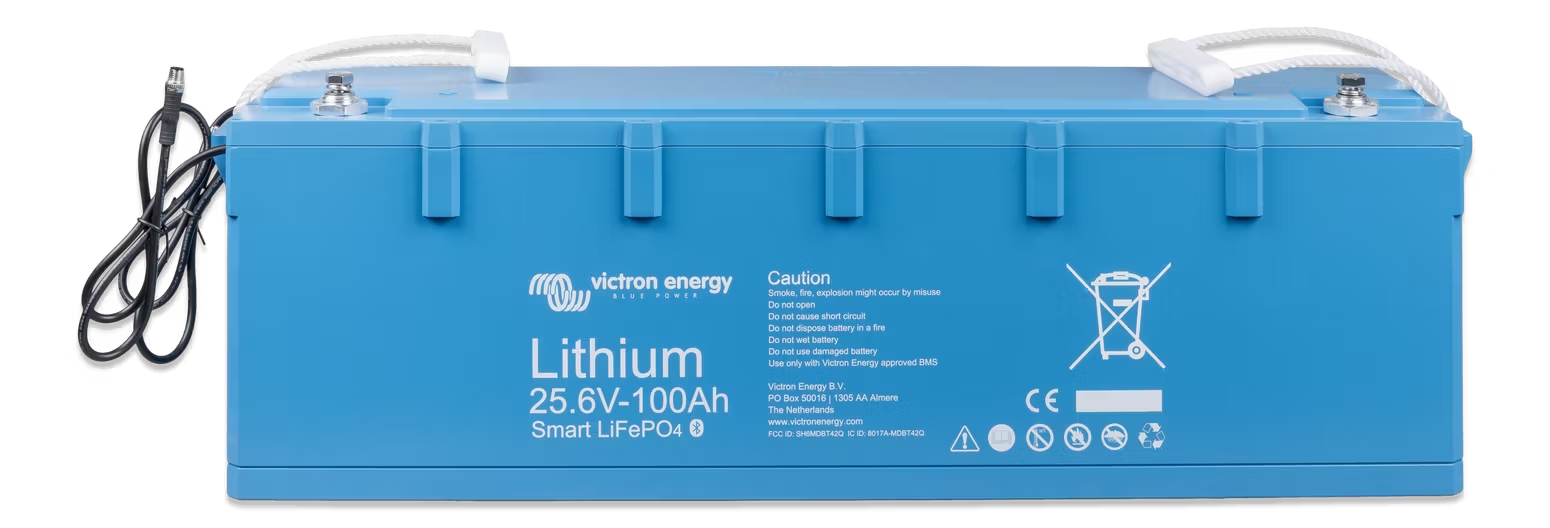
VICTRON ENERGY BAT524110610, is a Lithium Iron Phosphate battery at 25.6V/100Ah. LiFePO4 or LFP is the safest of common Li-ion battery types.
VICTRON ENERGY BAT524110610, is a Lithium Iron Phosphate battery at 25.6V/100Ah. LiFePO4 or LFP is the safest of common Li-ion battery types. The nominal voltage of an LFP cell is 3.2V (lead-acid: 2V/cell). A 12.8V battery therefore consists of four cells connected in series, and a 25.6V battery consists of eight cells connected in series. An LFP battery does not need to be fully charged. Its service life is even improved if it is partially charged instead of fully charged. This is a major advantage of an LFP battery compared to a lead-acid battery.
Other advantages
Efficient
In many applications (especially off-grid solar and/or wind installations), energy efficiency can be crucial. Round-trip efficiency (discharge from 100% to 0% and back to 100% charge) is 92% (80% for a typical lead-acid battery). The charging process of lead-acid batteries becomes particularly inefficient once 80% state of charge is reached, resulting in 50% efficiency or even less in solar systems where several days of reserve energy are required (battery life in 70% to 100% charged state). In contrast, an LFP battery will still achieve 90% efficiency under shallow discharge conditions.
Size and weight
Saves up to 70% in space and weight.
Is Lithium expensive?
LFP batteries cost more relative to lead-acid batteries. However, in demanding applications, the higher initial cost will be more than offset by longer service life, superior reliability, and excellent efficiency.
Bluetooth
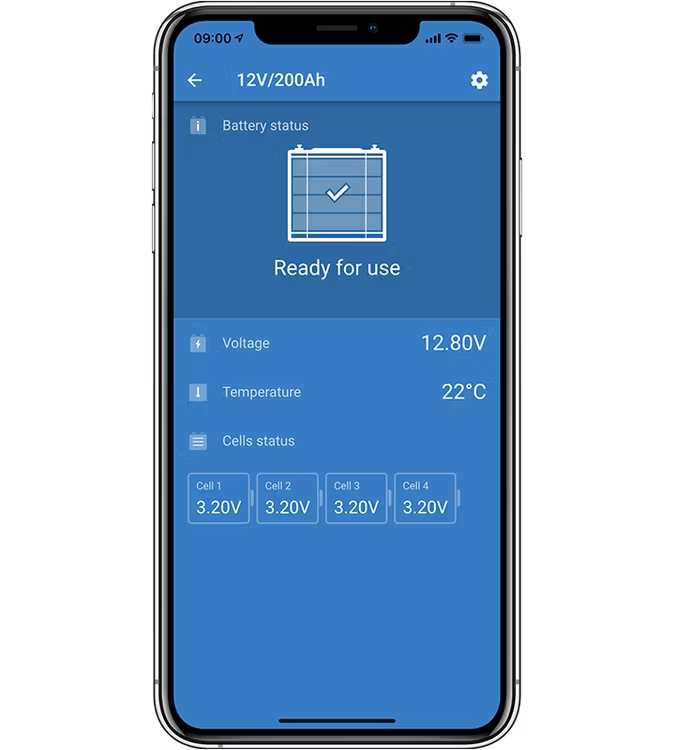
All Smart Lithium batteries have built-in Bluetooth so that cell voltage, temperature, and alarm status can be checked on a mobile phone using the free Victron Connect app (iOS/Android). This is very useful for locating (potential) problems such as cell imbalance.
Cell balancing
Our LFP batteries have integrated cell balancing and cell monitoring systems. Up to ten batteries can be connected in parallel and up to five batteries can be connected in series, providing a 48V battery bank with up to 1500 Ah. The cell balancing/monitoring cables can be daisy-chained and must be connected to a Battery Management System (BMS).
Battery Management System (BMS)
A BMS connects to the batteries and to two protective relays. Its main functions are: Disconnecting or shutting down the load when the voltage of a battery cell falls below 2.5V, stopping the charging process when the voltage of a battery cell increases to more than 4.2V, and shutting down the system when the temperature of a cell exceeds 50°C.
Good product-related links: