
 Svenska
 Dansk
Dansk
 Suomi
Suomi
 Español
 Deutsch
 Français
 Italiano
 Nederlands
 Polskie
 Norsk
Norsk
Cart
Your cart is empty, but doesn't have to be..
Discount: 0.00 EUR
Digital Skipper |7/01, 2026

For anyone using advanced electronics onboard – from navigation systems to powerful inverter solutions – a good grounding system is essential. A grounding plate, or "earthing plate," creates an effective connection between the boat’s electrical system and the sea, providing stability, safety, and optimal performance.
A grounding plate acts as a bridge between the boat’s electrical system and the water. It dissipates electrical interference and static electricity, which is especially important for:
Modern grounding plates, such as those from Glomex, are made of sintered bronze – a material consisting of millions of microspheres. This provides an effective surface up to ten times larger than the actual plate size. The large surface improves heat dissipation and ensures a stable electrical contact with the water.
The plates are mounted on the hull with corrosion-resistant bronze bolts and rubber spacers, guaranteeing long life and high resistance to marine environments.
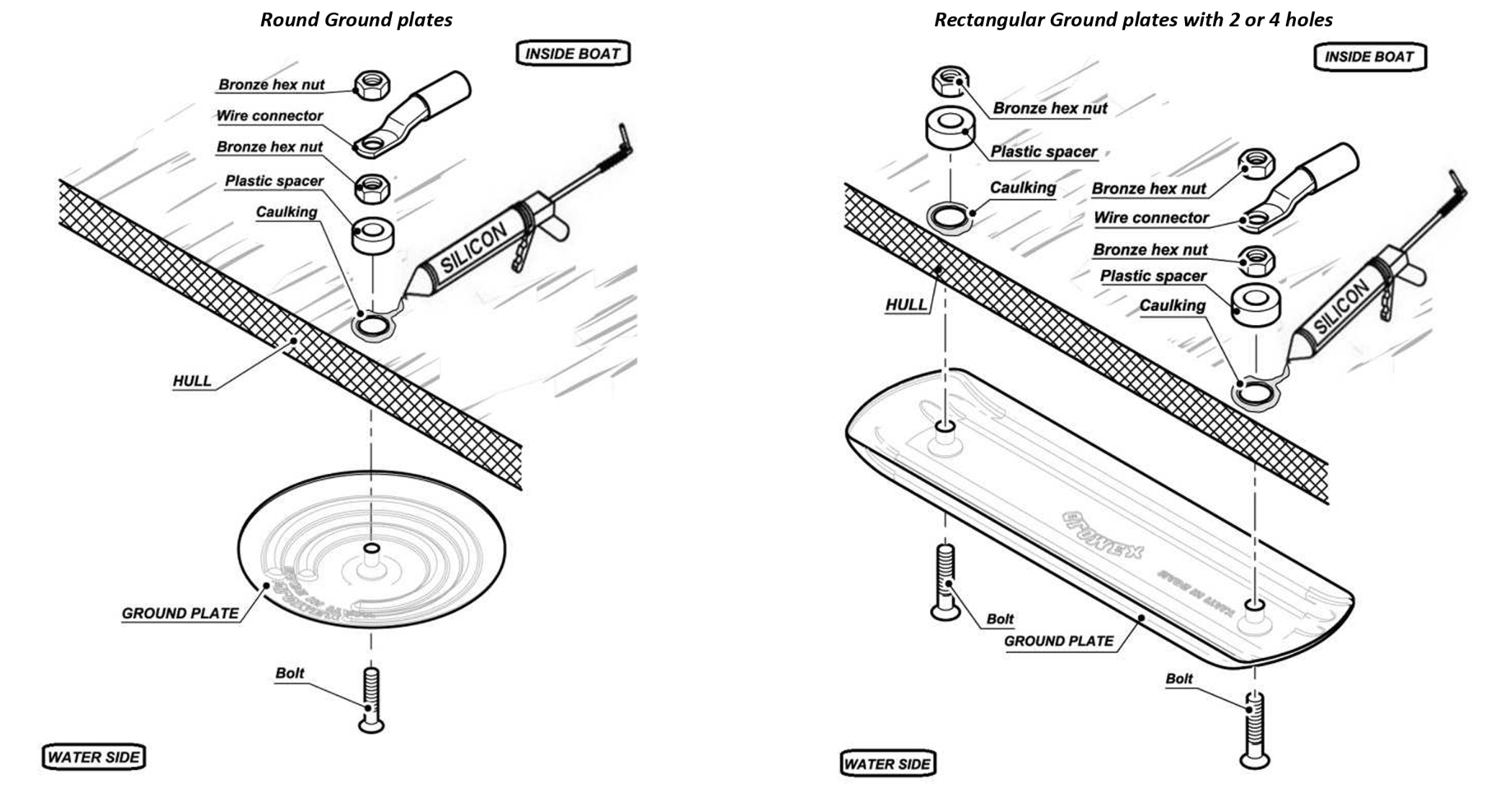
Victron Energy products such as Inverter, MultiPlus, and Quattro are the heart of many modern onboard electrical systems. For these to operate safely and efficiently, proper earthing is required:
Installing a grounding plate and ensuring Victron devices are properly earthed is not just a technical detail – it’s an investment in the boat’s functionality and safety. Tip: Use heavy-duty cables and corrosion-resistant connections for the grounding wire. Regularly check that the grounding plate is clean and free from deposits for best performance.
At Digital Skipper, you’ll find high-quality grounding plates that provide an optimal grounding system for your boat. Our products reduce electrical interference, protect against galvanic corrosion, and ensure proper earthing of electrical systems and power units. Click here to see the full range!