
 Svenska
 Dansk
Dansk
 Suomi
Suomi
 Español
 Deutsch
 Français
 Italiano
 Nederlands
 Polskie
 Norsk
Norsk
Cart
Your cart is empty, but doesn't have to be..
Discount: 0.00 EUR
Digital Skipper |6/10, 2022
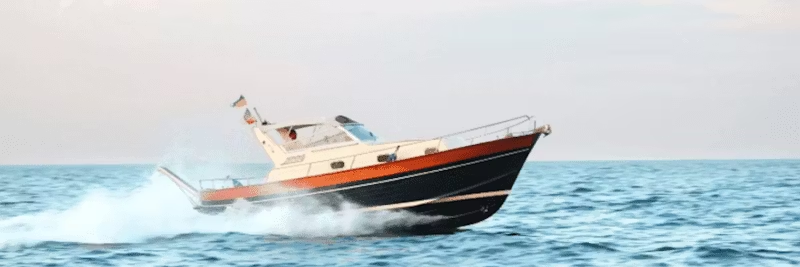
Boat ownership is a fantastic experience, but it's no secret that it can be costly – especially when you start choosing all the electronics and equipment to be installed on board. As a new boat owner, this can feel overwhelming, but with the right planning and knowledge, it doesn't have to be difficult.
The first and most important advice is to always do thorough research. Check that the electronic equipment you choose is suitable for the purpose and that you are not buying something that is oversized for your needs.
MFD acts as the control center in your NMEA 2000 network. It should be able to handle all the functions you need – from simple chart display to advanced features such as radar, sonar, and integration for commercial fishing. The range is large, and it's easy to get confused.
Tip: Contact the Manufacturer directly to ensure that their equipment meets your requirements. You don't always need an expensive MFD for SEK 20,000 if a simpler model for SEK 4,000 does the job just as well.
Once you have chosen the right equipment, the next step is to plan the installation. Draw a network diagram showing cables, devices, and connections. This makes the physical installation much easier and reduces the risk of errors.
See examples of network diagrams from Actisense
Even if your plan looks good on paper, always check the installation area. It is common to encounter obstacles that make cabling difficult or impossible. For example, a planned cable run through a bulkhead may prove impossible due to solid material.
With the right planning and knowledge, the installation of your boat electronics will be both easier and more cost-effective. Want to learn more about NMEA 2000 and best practices? Visit Actisense for guides and tips.