
 Svenska
 Dansk
Dansk
 Suomi
Suomi
 Español
 Deutsch
 Français
 Italiano
 Nederlands
 Polskie
 Norsk
Norsk
Cart
Your cart is empty, but doesn't have to be..
Discount: 0.00 EUR
Justin, Victron Energy |10/09, 2020
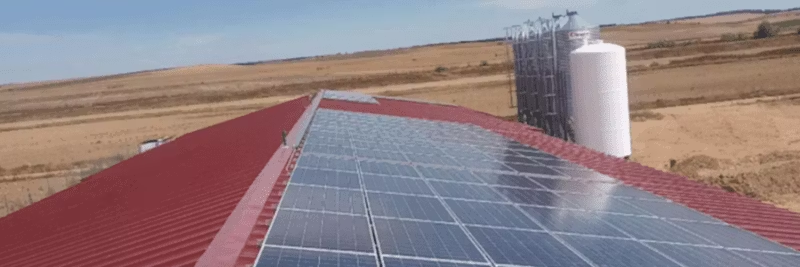
Ventilation and climate control account for the largest part of electricity consumption on a poultry farm. Constant temperature and excellent air quality are crucial for the optimal development of the birds and must be carefully controlled year-round. In a warm climate like Spain's, the summer season means a significant increase in electricity consumption – especially at night, making a reliable power supply absolutely essential.
The good news for poultry farmers is that the warm season is also when solar panels generate the most energy. The real challenge is to design a system that can deliver the farm's energy needs around the clock – with margin. This is the challenge that Cambio Energetico chose to take on for its customer JAVEPA S.L. – a modern turkey farmer in Zamora with a unit of 2480m2 under a thermal "sandwich" roof.
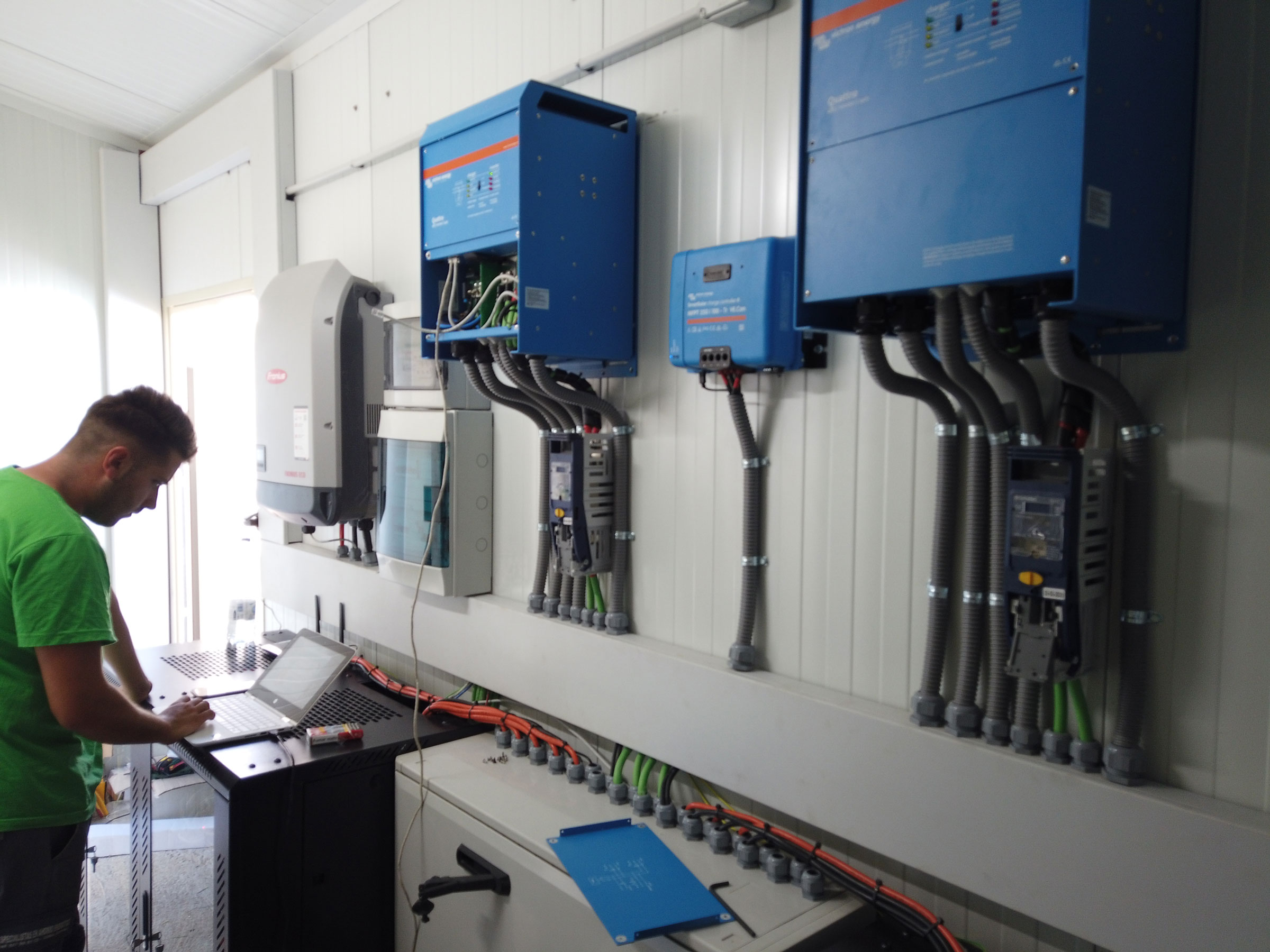
Configuring the inverters
Off-Grid system configuration
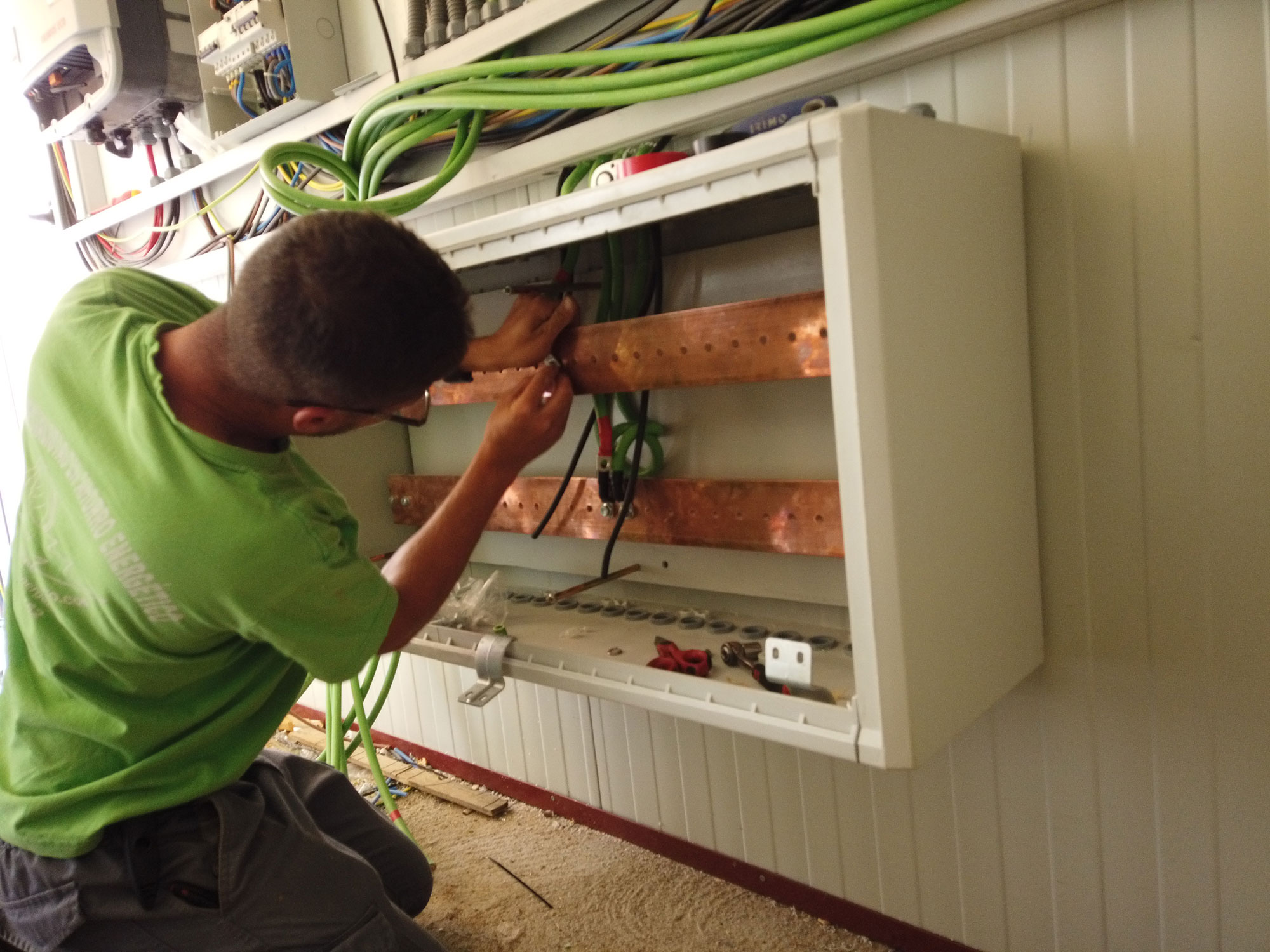
Connecting batteries to the busbar
Cambio Energetico, which has designed and installed off-grid systems for over a decade, chose an AC-coupled system for the JAVEPA project, where a Fronius inverter is paired with the Quattro units. The system also uses Pylontech lithium-ion batteries and a backup generator.
Connecting a Fronius grid-tied inverter to a Victron system is particularly interesting when the largest electricity consumption occurs during the day. The Fronius inverter directly powers the loads and improves efficiency to over 90%. When there is surplus energy from the solar panels, it is used to charge the batteries instead of reducing production. On cloudy days, the batteries supplement the solar energy without needing to start the generator; and at night, the batteries take over the entire supply (if they are sufficiently sized), and automatically start the generator if needed.
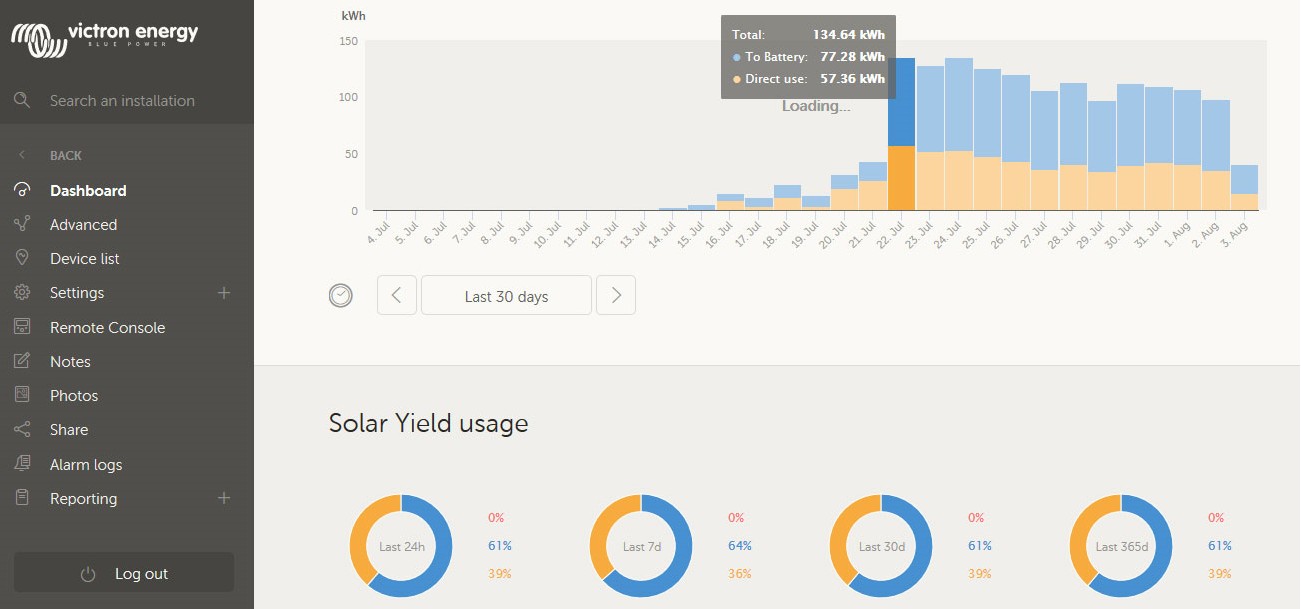
The image shows a new batch of turkeys that arrived on July 21st
One of the biggest advantages of an AC-coupled system like JAVEPA's is that it reduces unnecessary battery wear, which extends the lifespan of the batteries (battery storage is usually the most expensive and most consumable component in a solar installation).
Another advantage for JAVEPA is that the entire system can be monitored remotely via Victron's remote management portal VRM, which allows troubleshooting and fine-tuning to be done without technicians needing to visit the site.
A more conventional DC-coupled system is preferred for projects where industrial activity is greatest when solar energy is at its least. In such cases, the best option is a system that efficiently charges the battery bank.
In both cases, the generator only needs to run when necessary, which reduces fuel consumption, maintenance, and extends the generator's lifespan.
Fronius Setup MG 50/60
Connecting a Fronius grid-tied inverter to a Victron off-grid system is made possible by the Fronius Setup MG 50/60Hz. (MG stands for micro-grid and the choice between 50 or 60Hz depends on the country's standard).
Setup MG allows the grid inverter to modulate power based on the frequency it receives from the Victron inverter, which in turn adjusts the frequency depending on the battery's state of charge (SOC).
Setup MG works similarly when the generator supplies frequency and voltage. It modulates power based on voltage and avoids backflow when there is more solar energy than the loads require.
Lithium-ion batteries
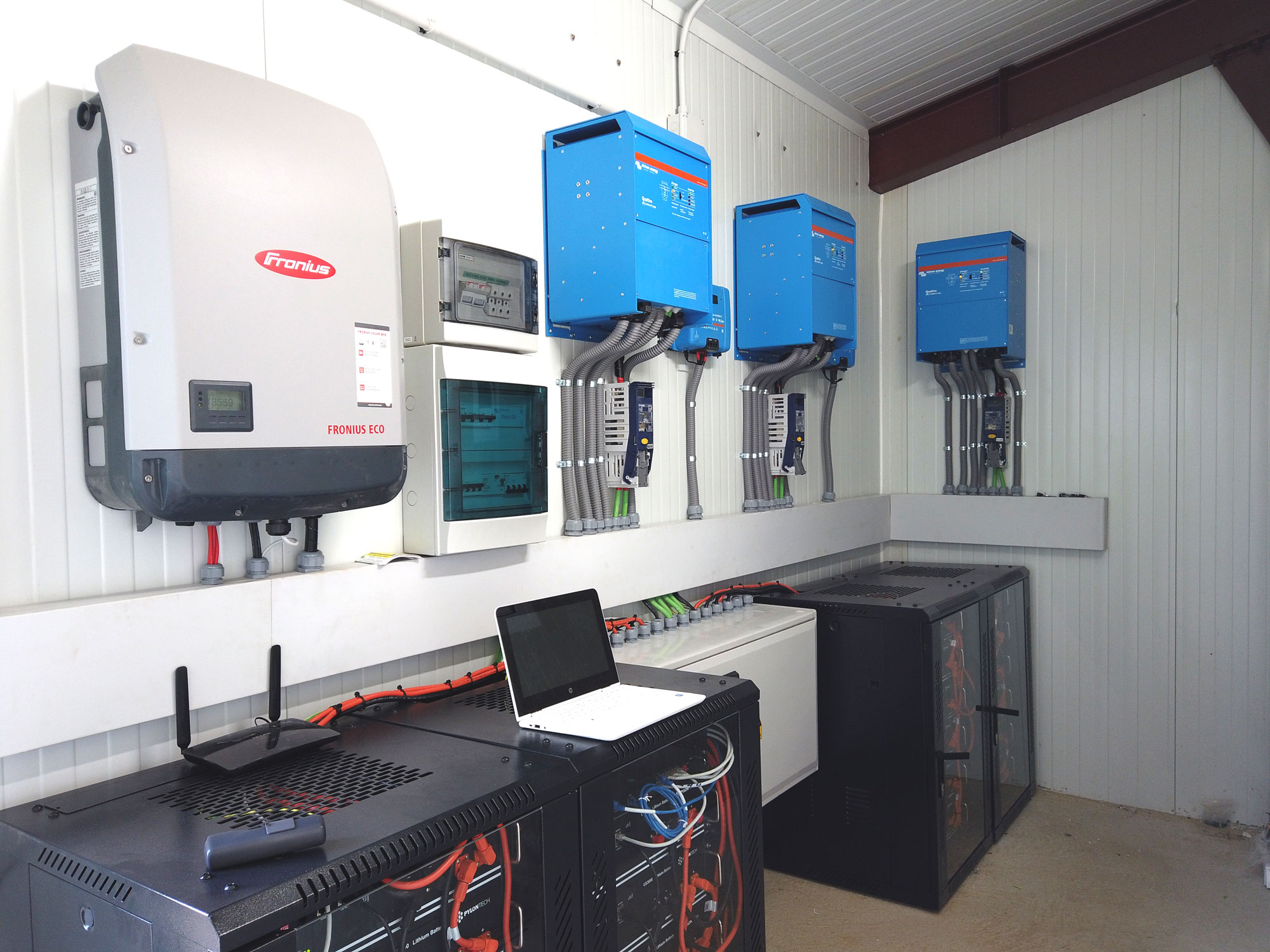
Practical installation – ready for use
Off-grid systems are increasingly choosing lithium-ion batteries instead of lead-acid batteries. Cambio Energetico chose Pylontech lithium-ion batteries for JAVEPA thanks to their high efficiency, greater discharge depth, and optimal scalability. The batteries' ability to report errors is another strong reason. Victron systems are compatible with several third-party lithium-ion batteries, including Pylontech.
Cambio Energetico has produced a video of the installation: